

Let's be honest, finding a so-called "work-life balance" isn't about some perfect, mythical 50/50 split. That's a recipe for failure. The real key is building a sustainable rhythm where both your work and your personal life can actually thrive without one constantly stealing from the other.
It all boils down to making small, strategic shifts that stick. We're going to focus on three core areas that make all the difference: drawing firm boundaries, designing your schedule with intention, and making your wellbeing non-negotiable.
Your First Steps Toward a Healthier Work-Life Balance
Most of us are stuck in an "always-on" culture. The lines between your professional duties and your personal time have become so blurred they're practically invisible. Sound familiar? You're not alone. Research shows a staggering 60% of professionals can't seem to disconnect from work, even on their own time.
This constant state of alert is exhausting. It kills your creativity, drains your energy, and prevents the mental reset you need to show up as your best self—both in the office and at home. The first step is just acknowledging that and deciding to take back control, one small action at a time.
Start With Three Core Pillars
The path to a more balanced life isn't complicated. It's a simple, three-part process that builds on itself: Boundaries, Schedule, and Wellbeing.
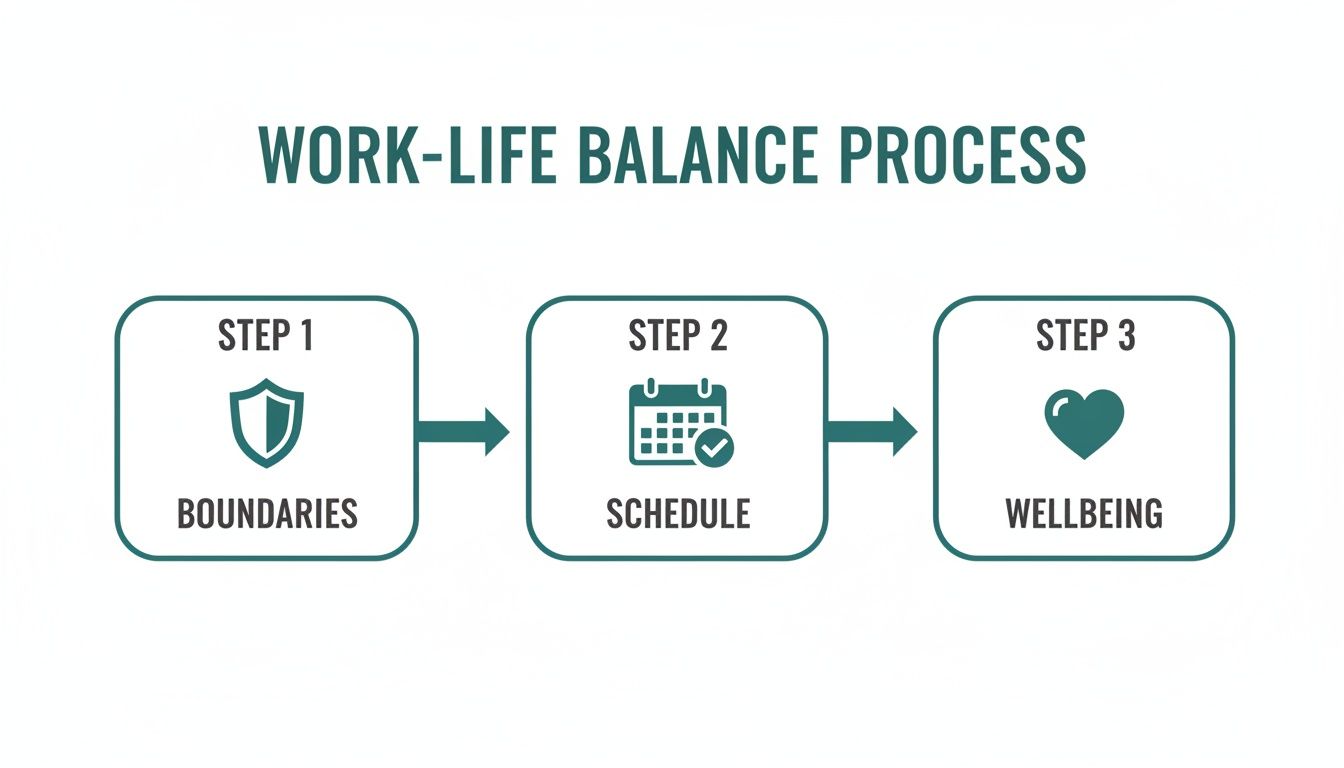 This is your roadmap. Each step lays the groundwork for the next, moving you from a reactive state (where work runs your life) to a proactive one (where you're in the driver's seat).
Starting new habits can feel like adding another thing to your to-do list. That's why I'm a big fan of using simple tools to provide structure. For instance, many people find that using one of the best habit tracking apps helps them stay consistent without adding more mental overhead.
Common Balance Killers and Your First-Step Fixes
Before we dive deeper, let's identify the usual suspects that throw our lives out of whack. Sometimes just seeing the problem written down—and having one simple fix—is the spark you need to get started.
Common ChallengeImpact on BalanceYour First Actionable Fix**"Always-On" Mentality**Can't mentally switch off, leading to burnout and stress bleeding into personal time.Set a firm "end-of-day" time. Put your work phone/laptop away and don't look at it until morning.Saying "Yes" Too OftenOvercommitted calendar, no time for yourself, and constantly feeling behind on everything.The next time you're asked for something, pause and say, "Let me check my schedule and get back to you."No Clear BoundariesWork notifications at dinner, late-night emails, and weekend calls become the norm.Turn off all work-related notifications on your phone after your set work hours. All of them.Ignoring Your WellbeingSkipping meals, poor sleep, no exercise. Your physical and mental health tank, making work harder.Schedule one 20-minute walk into your calendar this week during the workday. Treat it like a meeting.Tackling just one of these this week is a huge win. You don't need to solve everything at once; you just need to start.
The goal isn’t to achieve perfect balance every single day but to find a rhythm that feels sustainable over time. Balance starts with self-awareness and a willingness to keep showing up for both your work and your life.
If you're looking for more practical insights on handling work-related pressure, you can find some great effective strategies for a healthier work-life balance. Remember, that first small step is what sets the stage for real, lasting change.
The Undeniable Power of Setting Clear Boundaries
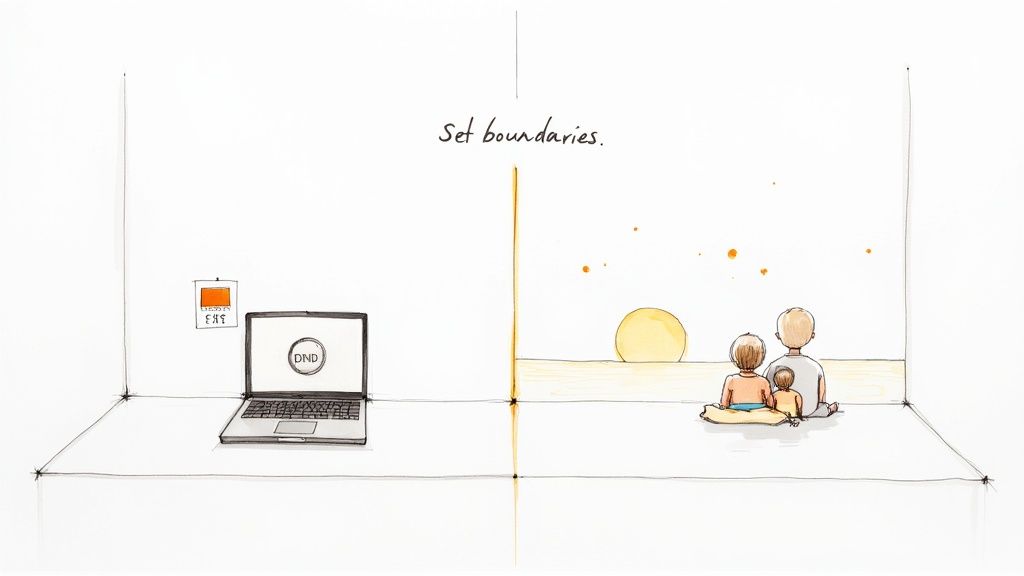
Let's get one thing straight: boundaries aren't walls you build to shut people out. Think of them more like guardrails on a highway—they’re there to protect your most valuable assets: your time, your energy, and your sanity.
Without them, work just bleeds into your personal life. It's that constant, low-grade stress that keeps you from ever truly unplugging and recharging. The first real step toward a healthier work-life balance is simply drawing a line in the sand—deciding where work ends and your life begins.
This isn't about being lazy or unhelpful. It's the exact opposite. When you have well-defined boundaries, you prevent the burnout that absolutely crushes productivity and creativity. Protect your downtime, and you'll come back to work sharper, more engaged, and ready to do your best work.
Moving From Theory to Practice
It’s easy to say you’ll set boundaries. It’s a whole different ballgame when that "quick question" from your boss pops up at 7 PM on a Tuesday.
The secret isn't willpower; it's having a plan. You need a few go-to scripts and strategies ready before you need them. This is about taking control of your time, not just reacting to every single ping and notification.
So many of us hesitate to draw these lines because of fear. We worry we'll look like we're not a team player, or that we're not committed enough. That feeling is incredibly common, especially in company cultures where working late is worn like a badge of honor.
But here’s the truth: refusing to answer an email at 10 PM isn’t a sign of weakness. It’s the mark of a professional who knows that peak performance requires proper rest.
The pressure to be constantly available is a huge source of anxiety for a lot of people. Recent data really drives this home: while 28% of employees say work-life balance is their #1 motivator at a job (even more than pay!), a whopping 34% are afraid that not responding instantly will make them look bad at work.
Practical Scripts for Protecting Your Time
Having a few polite, firm phrases in your back pocket can make all the difference. It’s about communicating your limits clearly and with respect.
Here are a few you can steal:
- For last-minute requests: "Thanks for thinking of me for this. I'm already committed for the evening, but I'll be happy to jump on it first thing in the morning."
- For non-urgent weekend emails: "I'm offline for the weekend to recharge, but I will get back to you as soon as I'm back on Monday." (This is perfect for an out-of-office auto-responder!)
- For scope creep on a project: "That sounds like an interesting addition. Let's schedule a time next week to see how we can best fit it into our current priorities."
These simple replies set clear expectations without creating conflict. They reinforce that you're available during work hours while protecting the personal time you need to function. Getting this clarity is fundamental to breaking the cycle of feeling perpetually buried. For more on that, check out our guide on how to stop being overwhelmed by tasks when you've got way too much on your plate.
Ultimately, setting boundaries is an act of self-respect that pays dividends for everyone. You teach your colleagues how to interact with you, you save your energy for the work that actually matters, and you build a sustainable rhythm that lets you perform at your best for the long haul.
Designing Your Week for Success and Sanity
Okay, so your boundaries are in place. Now you can stop playing defense and start playing offense. Designing your week isn't about cramming more stuff into your calendar. Far from it. It's about consciously carving out space for what actually matters to you, both at work and at home.
When you do this, you fundamentally flip the script on your relationship with time. Instead of your calendar bossing you around, you take the reins. It becomes a tool that serves your goals, not the other way around.
 ### Embrace Intentional Scheduling
One of the most powerful things I've ever done to get my week back is adopting time blocking. The concept is simple: treat your personal commitments with the same respect you'd give a major client meeting. You wouldn't just blow off a client, right? So why is it so easy to blow off appointments with yourself?
Start by literally scheduling your non-negotiables into your calendar. I'm talking family dinners, daily walks, whatever keeps you sane.
- Block out "deep work" periods: I live by this. Set aside a few two-hour slots for focused, heads-down work on your most important projects. This is how you stop your entire day from getting chewed up by random emails and pings.
- Schedule personal appointments: Put your gym sessions, hobbies, or even just 30 minutes to read a book on the calendar. If it's on the schedule, it's real.
- Plan your downtime: I know, it sounds a little strange to schedule "do nothing" time. But if you don't, it won't happen. This ensures you actually get the rest you need to recharge your batteries.
Build Buffers to Avoid Burnout
Here’s a classic mistake I see people make all the time: scheduling everything back-to-back. This creates a constant feeling of being rushed and leaves zero margin for error. One small delay can throw your whole day into chaos and spike your stress levels.
The fix is surprisingly simple: build buffer time between your commitments.
Even a 15-minute gap between meetings can be a game-changer. Use it to stand up, stretch, grab some water, or just mentally reset before diving into the next thing. It’s a tiny habit that prevents the cognitive overload that leaves you feeling completely drained by 5 PM.
A well-designed week isn't about rigid, militant control. It's about creating a flexible structure that protects your time and, more importantly, your energy. Think of it as a framework that cuts down on decision fatigue, freeing up your brainpower for the stuff that truly counts.
To keep these new routines on track without adding yet another thing to remember, it might be worth checking out some of the best daily routine apps. A simple automated nudge can be all you need to stick with the plan you've so thoughtfully created, reinforcing your commitment to a healthier balance.
Using a Simple Tool to Automate Your Routines
Let's be real—designing new routines is the fun part. Sticking with them? That's where the wheels usually fall off. That initial burst of motivation to block out personal time or protect your evenings eventually wears thin, and before you know it, old habits are creeping back in.
This is where a small productivity hack can make a massive difference. It's about solidifying the positive changes you're making to finally nail down that work-life balance.
Big, complex project management tools are great for… well, big, complex projects. They’re fantastic for work deliverables. But for the small, personal nudges that help you protect your time, you need something entirely different. Think of it as an invisible tool working in the background, reinforcing your new boundaries without adding more noise to your day.
The Power of Gentle Nudges
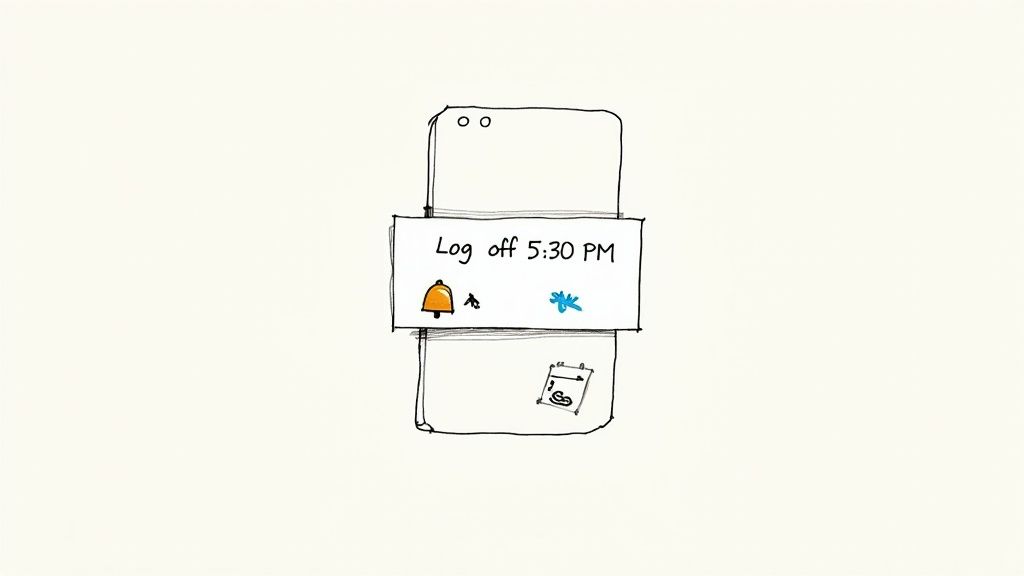
This is where a simple, focused app can be an absolute game-changer. Imagine getting a ping on your phone at 5:30 PM that just says, "Time to log off and shut the laptop." Or a weekly reminder on Friday afternoon: "Schedule one fun, non-work thing for this weekend."
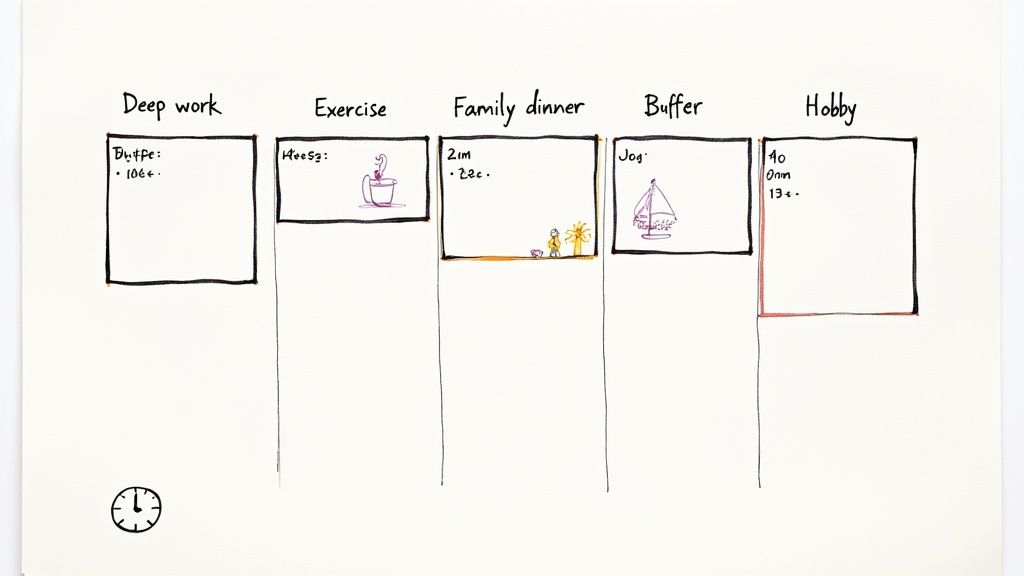 This kind of well-structured day looks great on paper, but those automated reminders are the secret sauce to making it actually happen. They act like gentle guardrails, making sure the important personal stuff doesn’t get swallowed up by a chaotic workday.
I know a busy marketer who lives in her primary task manager for campaigns and deadlines. That tool is essential for her job, but it's not designed to remind her to take a 15-minute walk or check in with her family. For that, she uses a hidden gem like Recurrr as a small productivity hack, sending those recurring personal prompts to keep her own well-being on the radar.
It's a subtle but powerful distinction: using your main tools for work while adding a lightweight, invisible tool for personal routine reinforcement. This approach keeps your head clear and your focus sharp. If you're curious about different options out there, you can find some helpful comparisons when searching for the best recurring task app to fit what you need.
The goal isn’t to add another complicated system to your life. It’s to find a dead-simple, automated way to hold yourself accountable to the personal commitments that are just so easy to let slide.
Automation is a powerful ally here. And for the tasks that software can't quite handle, don't forget you can automate with human help, too. Looking into options like hiring an outsourced personal assistant can free you from the administrative quicksand that eats into your personal time.
By delegating and automating, you create the breathing room you actually need for a truly balanced life.
Lessons From the World’s Work-Life Balance Champions
Sometimes, the best way to figure out how to maintain work-life balance is to look at who’s already nailing it. It’s not just about individual habits; entire countries have built cultures around working smarter, not harder. By looking at these global champions, we can borrow their successful strategies and apply them on a personal scale.
We don't need to reinvent the wheel. Countries like New Zealand and Norway offer a proven blueprint. They treat rest not as a luxury or a sign of weakness, but as a critical component of high performance and a fulfilling life.
Adopting that mindset is the first step toward reclaiming your own time.
 ### Translate National Policies into Personal Habits
You might not be able to change national policy overnight, but you can absolutely implement its core principles in your own life. These countries provide a powerful roadmap for what’s possible when well-being is the priority.
Take New Zealand. It's not just known for stunning scenery; it’s a global leader in work-life harmony, largely due to smart policies anyone can emulate. The country earned the top spot in Remote.com's Global Life-Work Balance Index with a score of 86.59 out of 100. This is driven by things like a generous 32 days of statutory annual leave.
Norway also ranks high, boasting a remarkably short average workweek of just 32.6 hours. Think about that. They're getting things done without the endless grind. You can discover more insights about these global rankings and see how other countries stack up.
The lesson here is crystal clear: taking significant time off isn’t slacking—it’s a strategy. These cultures understand that a rested mind is a productive mind.
Put These Lessons into Action Today
You can start applying these "champion" strategies to your own routine immediately. It all starts with looking at your current habits and making conscious choices to protect your personal time.
Here are a few actionable takeaways inspired by these balanced cultures:
- Conduct a Vacation Audit: Seriously, how many vacation days did you actually take last year? Following New Zealand’s lead, open your calendar right now and proactively book your time off for the rest of the year. Don’t wait for burnout to force you into a break.
- Track Your Hours for One Week: Inspired by Norway, track your actual work hours for a single week. The results might shock you. This simple exercise can reveal major time sinks and inefficiencies, giving you the data you need to shorten your own workweek.
- Establish a 'Right to Disconnect': You don't need a law for this. Make it a personal policy. Set clear expectations with your team that you won't be responding to non-urgent messages after a certain time each day. A simple Slack status update or email signature can do wonders.
By adopting these small but significant habits, you’re not just managing your schedule—you’re adopting a proven philosophy. You are treating your rest and personal life with the same importance as your professional duties. This shift is fundamental to building a sustainable and genuinely balanced life, moving you from feeling constantly overwhelmed to being in control.
A Few Common Questions About Work-Life Balance
Making a real shift toward better work-life balance is a journey, and it’s totally normal for questions to pop up along the way. As you start putting new boundaries and routines into practice, you’ll probably bump into some common roadblocks.
This is where the theory meets reality. Let's tackle some of the most frequent hurdles head-on with some straight, actionable answers to keep you moving forward.
How Long Does It Take to See a Real Difference?
This is the big one, isn't it? The honest answer is that you'll feel it both instantly and gradually.
That very first time you protect your evening by declining a late-night work request? You’ll feel an immediate sense of relief and control. It’s a small win, but it’s powerful.
The deeper, more lasting changes—like genuinely lower stress levels and more creative energy—take a bit more time. It’s all about consistency. Most people start to notice a real, meaningful shift in their overall well-being within a few weeks of sticking with it.
The most important thing is to let go of the idea of perfection. Some days will feel balanced, others won't. That’s okay. We're aiming for sustainable progress, not a flawless record from day one.
What if My Boss or Company Culture Expects an 'Always-On' Attitude?
This is a tough spot to be in, but it’s incredibly common. The best way to start is by quietly modeling the behavior you want to see become the norm. Make a habit of logging off at your designated time and setting clear out-of-office replies for evenings and weekends.
You might be surprised to find that a lot of the pressure we feel is actually self-imposed. If your performance stays high—and it probably will, since you’ll be better rested—your actions will do the talking for you. If you still feel direct pressure, it might be time for an open conversation about expectations, framed around results and output, not just hours clocked in.
It’s worth noting that the working world has changed. A recent analysis found that 76% of hybrid workers and a massive 85% of fully remote employees see better work-life balance as a top perk of their flexible schedule. The expectation of being "always on" is becoming outdated. You can read the full research about these global work-life balance statistics to see just how much the trends are shifting.
Is It Possible to Have Work-Life Balance in a Demanding Career?
Absolutely. In fact, for long-term success in any high-pressure field, it's not just possible—it's non-negotiable. The most successful people aren't the ones burning the midnight oil every night. They're the ones who work smarter and fiercely protect their energy.
For anyone in a demanding role, the strategies we've discussed are even more critical:
- Time Blocking: Get ruthless about scheduling and protecting your deep work sessions. You'll accomplish far more in less time.
- Clear Boundaries: Your "off" time is not a luxury; it's essential for recovery and has to be treated as non-negotiable.
- Strategic Disconnection: Actively scheduling time to do nothing related to work is what allows your brain to recharge, solve complex problems, and stay creative.
Having a healthy work-life balance in a tough job isn't a sign of slacking off. It’s the mark of a true professional who understands that peak performance is a cycle of effort and strategic rest, not an endless sprint toward burnout.
Ready to stop juggling and start automating? Recurrr is the simple, invisible tool that helps you build the personal routines that protect your time and energy. Set gentle, recurring reminders for logging off, taking breaks, or scheduling personal activities, and let the tool handle the consistency for you. Start simplifying your life with Recurrr today!