


A weekly cleaning schedule template is just a simple way to break down the monumental task of "cleaning the house" into small, manageable chunks you can do each day. Instead of sacrificing your entire weekend to a cleaning frenzy, you just handle one or two small areas daily. The result? A home that stays consistently clean with way less daily effort.
Why Most Cleaning Routines Fail (And How a Template Fixes It)
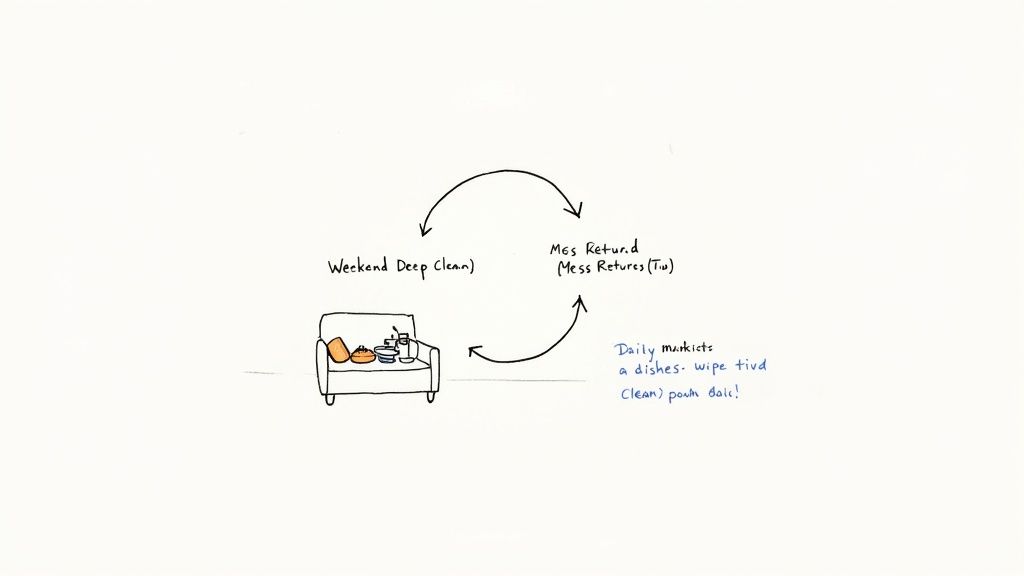
Let’s be real for a second. The endless cycle of cleaning can be absolutely draining. You spend all day Saturday scrubbing, vacuuming, and tidying, only to watch the mess and clutter slowly creep back by Tuesday. It feels like a losing battle.
This all-or-nothing approach is exactly why most cleaning routines don't stick. It leads straight to burnout and makes the idea of tidying up feel like a massive, insurmountable project.
The secret isn’t to clean more—it’s to clean smarter. A good weekly cleaning schedule template turns that chaos into a calm, sustainable system. By giving specific, small tasks to each day of the week, you get rid of the decision fatigue and that awful feeling of being overwhelmed. (If that feeling is a constant struggle, we've got a whole guide on how to stop being overwhelmed by tasks that might help.)
 ### From Reactive Cleaning to Proactive Maintenance
The real magic happens when you shift from constantly reacting to messes to proactively maintaining a baseline of clean. You stop waiting for a room to become a disaster zone before you tackle it. It's a method the professional cleaning industry has been using for years to get consistent, efficient results.
Believe it or not, households that use a structured template can slash their total cleaning time by as much as 40% compared to people who just clean whenever they get around to it. It’s a simple system that brings predictable order to a chaotic part of life.
This structured approach can be especially powerful for anyone dealing with executive function challenges. Gaining insights into cleaning with ADHD, for example, can be a game-changer. It helps explain why past attempts at routines might have fizzled out and how a simple template provides the external structure needed for success.
Ultimately, a good schedule is about restoring balance. It gives you back your precious free time and mental energy, turning your home from another item on your to-do list back into a sanctuary.
Designing a Cleaning Schedule You Can Live With
Let's be honest, those rigid, one-size-fits-all cleaning checklists you find online? They're mostly garbage. The only weekly cleaning schedule template that has a real shot at sticking is the one you build for yourself. It needs to be molded around your home, your life, and frankly, your personal tolerance for a little bit of mess. The goal here isn't a list that makes you feel guilty, but a realistic plan that actually works for you.
This whole process kicks off with what I call a "chore brain dump." It's simple. Grab a piece of paper or open a new note on your phone and just walk through your home, room by room. Write down every single cleaning task that comes to mind. Don't filter yourself. From the obvious stuff like wiping kitchen counters to the things you do once in a blue moon like dusting ceiling fans, get it all down. Don't worry about organizing it yet; just get it out of your head and onto the page.
Once you have that master list, you can start bringing some order to the chaos. This is where you build a system that fits your life, not the other way around.
Categorize Tasks by Frequency
The next move is to sort that brain dump into piles based on how often each task really needs doing. This is the key to stopping that overwhelming feeling that you have to do everything, all at once, right now.
Your categories will probably look something like this:
- Daily Tasks: These are the quick, 5-10 minute actions that keep total chaos at bay. Think making the bed, wiping down kitchen counters after dinner, and doing a quick tidy of the main living area before bed.
- Weekly Tasks: This is the core of your cleaning routine. We're talking about things like vacuuming all the floors, giving the bathrooms a proper clean, changing the bed linens, and taking out the trash and recycling.
- Monthly Tasks: These are the slightly deeper cleaning jobs. This could be wiping down baseboards, cleaning out the microwave, or dusting all the light fixtures.
- Seasonal/Quarterly Tasks: And finally, the big-ticket items. Things like washing the windows, deep cleaning the carpets, or finally tackling the garage.
Taking the time to create these categories is the first step toward reclaiming your time and energy. It helps you see that not everything is a five-alarm fire, which is a huge mental shift for finding a better work-life balance at home.
Choose Your Cleaning Strategy
Okay, so how do you actually slot those weekly tasks onto specific days? There are two popular methods that people swear by. Neither is right or wrong; it's all about what clicks with your brain and your schedule.
1. Room-of-the-Day Batching
With this strategy, you dedicate each day of the week to one specific room or zone. All your cleaning energy for that day is hyper-focused on one space, which can feel incredibly satisfying when it's done.
- Monday: Bathrooms (scrub toilets, sinks, showers)
- Tuesday: Bedrooms (dust furniture, change sheets, tidy)
- Wednesday: Kitchen Deep Clean (wipe appliances, clean stovetop)
- Thursday: Living Areas (dust, vacuum, declutter)
- Friday: Floors (vacuum and mop all hard surfaces)
2. Task-of-the-Day Batching
This approach flips the script. Instead of focusing on a room, you pick one type of task and do it throughout the entire house. This is fantastic for people who like to get in a groove with one specific tool or cleaning supply.
- Monday: Dusting Day (dust all surfaces in every single room)
- Tuesday: Wiping Day (tackle all mirrors, glass, and surfaces)
- Wednesday: Bathroom Day (focus solely on bathrooms)
- Thursday: Floor Day (vacuum all carpets and rugs)
- Friday: Mop & Catch-Up Day (mop hard floors and knock out any missed tasks)
Give both strategies a try. See which one feels less like a dreaded chore and more like a simple, repeatable routine you can actually live with.
Find Your Perfect Cleaning Template
Every home has its own rhythm, and your cleaning schedule should match it. Let's be honest, that generic checklist you downloaded from the internet probably doesn't account for your actual life—whether you're a busy professional, part of a chaotic family, or just trying to keep the peace with roommates.
Instead of trying to force a rigid system, the trick is to find a weekly cleaning schedule template that works as a solid starting point. Think of these less as strict lists of chores and more as strategic roadmaps designed for real-world situations. They give you a framework you can easily bend and shape to fit your needs.
Not sure where to begin? This little decision tree can help you figure out which approach—focusing on one room per day or one task per day—might be a better fit for your home and personal style.
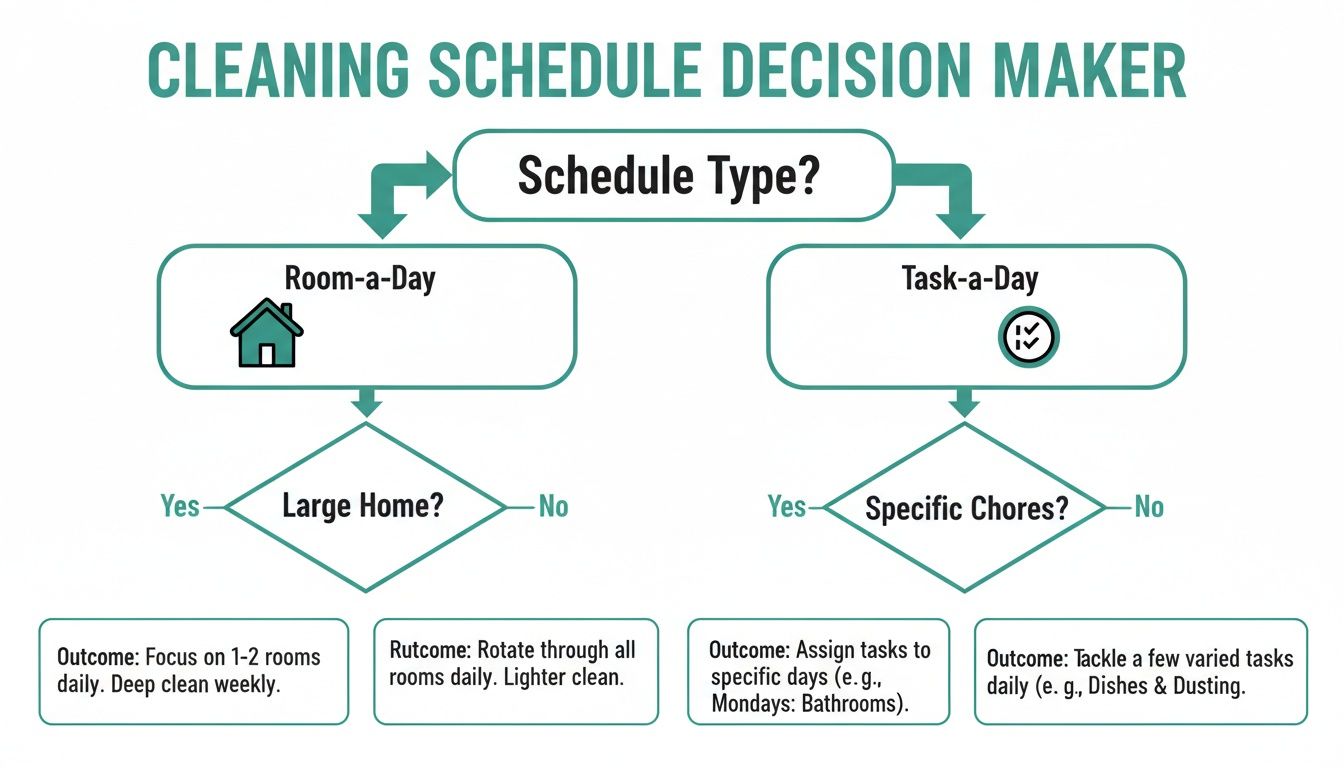 As you can see, it’s a simple choice. A "Room-a-Day" plan usually works wonders for larger homes, while a "Task-a-Day" method can be way more efficient for smaller spaces where you can, say, dust the whole place in one quick go.
Template for the Busy Professional
When you're juggling long hours and a demanding career, the goal is maximum impact in minimum time. This template is all about hitting the high-visibility areas that make the whole home feel cleaner, even when you're completely slammed.
- Weekdays (15 mins/day): Nail the quick daily reset. This means making the bed, wiping down the kitchen counter and bathroom sink, and doing a 5-minute tidy of the main living space before you leave or crash for the night.
- Weekend (1-2 hours): This is your power session for the bigger stuff. Knock out the full bathroom clean, vacuum all the floors, and change the bed linens. This approach keeps your weeknights free while still giving the home a proper reset.
Template for the Family with Kids
Once kids enter the picture, the game changes from pristine to managed chaos. This schedule is designed to tackle mess-prone zones daily and—most importantly—get the whole family involved.
- Daily Tasks: Focus on the high-traffic zones. A quick floor sweep in the kitchen, wiping down the dining table, and a 10-minute "toy sweep" in the living room are absolute non-negotiables.
- Weekly Rotation: Give each family member a specific, age-appropriate chore. One person might be on bathroom duty for the week, while another is in charge of taking out the trash and recycling.
- Sunday Reset: Use Sunday evening to prep for the week ahead. Get lunches packed, organize backpacks, and do a collective tidy-up of all the common areas. It makes Monday mornings so much smoother.
Template for Roommate Harmony
Living with other people demands clear communication and a fair split of the workload. This template is all about shared responsibility to keep resentment from creeping in.
The secret here is fairness and transparency. A shared, visible schedule—stuck right on the fridge—eliminates any confusion about whose turn it is to scrub the toilet.
This idea of a structured plan is powerful for all sorts of home organization, not just cleaning. To see how a template can organize other kinds of upkeep, take a look at this home preventive maintenance schedule template.
Making Your New Cleaning Habit Stick
Having a shiny new weekly cleaning schedule template is a fantastic start, but let's be honest—it's only half the battle. Now for the hard part: actually sticking to it.
The real challenge is turning that piece of paper into an automatic, second-nature habit. And the secret isn't about finding more willpower or motivation. It's about building a smarter system that makes consistency feel easy.
This is where a little practical psychology comes in. You don't have to overhaul your entire life overnight. Instead, we can use a few proven tricks that work with your brain's natural tendencies, not against them.
Overcome Procrastination with Small Wins
One of the biggest hurdles is just getting off the couch. When you're tired, the thought of even a small chore can feel like climbing a mountain. This is where a simple mental trick, often called the "15-minute rule," can be a total game-changer.
Just tell yourself you only have to clean for 15 minutes. That's it. Set a timer and start. Anyone can do something for just 15 minutes, right? More often than not, once you're up and moving, you'll find the momentum to finish the whole task without even thinking about it.
Another powerful technique is habit stacking. This is all about piggybacking a new cleaning task onto a habit that's already completely ingrained in your routine.
- For example: After you finish brewing your morning coffee (your existing habit), immediately spend five minutes wiping down the kitchen counters (your new habit).
By linking the new action to an old one, you essentially remove the need for a reminder. The old habit becomes the trigger for the new one, putting the entire process on autopilot. If you're looking to build more routines like this, exploring some of the best habit tracking apps can give you the extra structure and accountability you need to make it stick.
Build in Flexibility and Reduce Friction
Look, no schedule survives contact with real life. Kids get sick, you have to work late, things come up. Perfection is the enemy of consistency.
That’s why your system needs a built-in release valve: the catch-up day. Designate one day a week—maybe Sunday afternoon—to simply tackle any tasks you missed. Just knowing you have this buffer relieves the pressure to be perfect every single day.
Finally, make it ridiculously easy to start. Get your tools and supplies ready ahead of time. If Tuesday is bathroom day, make sure your sprays, cloths, and toilet brush are all stored together in a little caddy right under the sink. This simple act of preparation eliminates the "friction" that so often leads to putting things off.
The core idea is that consistency beats intensity every time. A little bit of cleaning done regularly is far more effective than a massive, infrequent deep clean that leaves you exhausted and dreading the next one.
An Invisible Tool to Automate Your Reminders
So you've created the perfect weekly cleaning schedule template. That's a huge step. But a plan is only as good as your ability to stick with it, and life gets busy. Remembering to actually look at the schedule is often the hardest part.
This is where a small productivity hack comes in, and it doesn't involve downloading yet another complicated app that buzzes you all day. What if the reminders just… appeared where you already spend your time?
Let Your Inbox Do the Nudging
The best tools are often the ones you barely notice. They do one thing perfectly and then get out of your way. That's the whole idea behind a simple, clever service like Recurrr. It’s not a massive project management suite or a habit tracker with a million features. It's a hidden gem that just works quietly in the background.
Think of it as an invisible assistant whose only job is to send you recurring email reminders for whatever you tell it to. For anyone who basically lives in their inbox, this is a "set it and forget it" solution that makes following your cleaning schedule practically effortless.
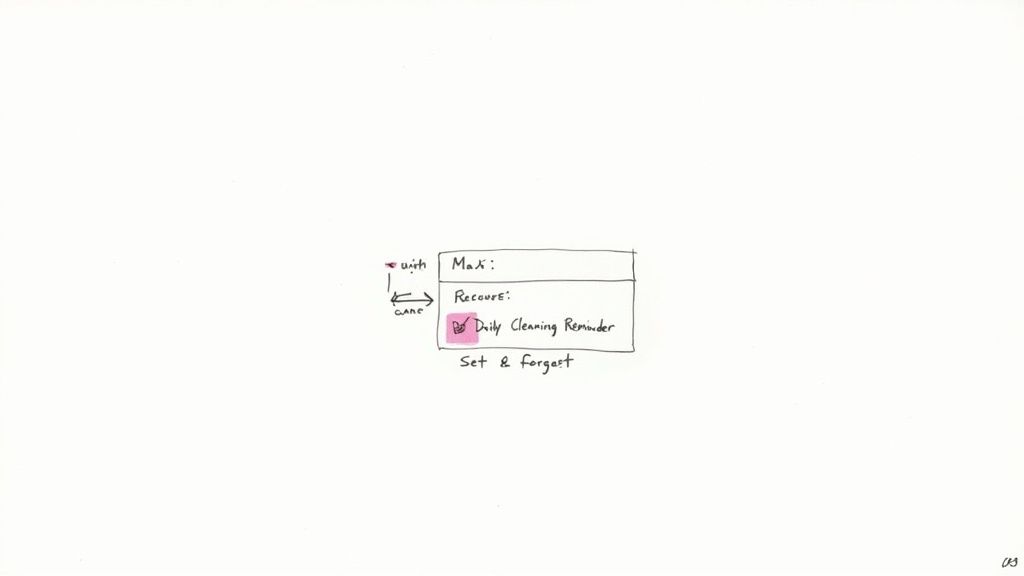
Getting started is refreshingly simple. You just tell Recurrr what the task is and how often you want to be reminded. It’s a minimalist approach that cuts through the noise.
Here’s a look at how clean the interface is for setting up a recurring task.
 You could set up an email for each of your key cleaning jobs. For instance:
- "Time to clean bathrooms" sent every Monday at 9 AM.
- "Change bed linens" sent every Tuesday at 2 PM.
- "Quick floor sweep and mop" sent every Friday at 8 AM.
Suddenly, your static schedule becomes a dynamic, automated system. The right prompt appears at the right time, gently nudging you to tackle the day’s task without you having to constantly check a separate app or a chart on the fridge.
Why Email Reminders Just Work
Let's be honest, most of us are already glued to our email. One study found the average professional spends over three hours a day in their work inbox alone. By plugging your cleaning reminders directly into a workflow you already have, you eliminate the friction of adopting a new habit.
The real beauty of this system is how passive it is. It doesn't scream for your attention with loud notifications or cluttered dashboards. It’s just a quiet, reliable partner helping you stay on track with zero extra effort.
This is a totally different approach from other tools that try to manage your entire life. It’s a lightweight addition, a small hack that complements whatever systems you're already using. It slides right in without forcing you to change how you do things.
If you're curious about other tools in this space, our guide on the best recurring task app gives a much broader look at the options out there.
Ultimately, by automating the reminders for your weekly cleaning schedule template, you free up a ton of mental energy. You no longer have to carry the burden of remembering what needs to be done each day. The system does the remembering for you, letting you focus on the simple act of doing.
Still Have Questions? Let's Clear Things Up
Even with the perfect template, it's totally normal to have a few "what if" questions pop up as you get started. You're definitely not alone. Thinking through these common sticking points now will help you dial in your routine and turn it into a habit that actually lasts.
Let's tackle some of the most frequent questions I hear.
How Much Time Should I Really Spend Cleaning Each Day?
On weekdays, aim for the sweet spot: somewhere between 15 and 30 minutes. That’s usually just enough time to get the day's tasks done without feeling like you've taken on a second job. The whole idea is to chip away at the work, not let it build into a weekend-consuming monster.
Think of it as daily maintenance, not a full-blown deep clean. Save an hour or two on the weekend for the bigger stuff, like scrubbing the shower or tackling anything you had to skip. This balance is what keeps the chores from taking over your life.
What Happens If I Miss a Day?
Life happens. You get home late, you're not feeling well, or something more important comes up. Don't sweat it. A cleaning schedule is supposed to be a tool, not a source of guilt.
When you miss a day, you've got two simple, stress-free options. You can either push those chores to a "catch-up" day (a lot of people use Sunday for this), or you can just let them go until their next turn comes around. Honestly, unless it’s something urgent, skipping the baseboards for one week won't be the end of the world.
The most important thing is to just pick it back up the next day. Consistency over perfection is what makes this system work long-term.
How Do I Get My Family or Roommates on Board?
When you're sharing a space, a cleaning schedule only works if everyone is bought in. This is all about communication and setting clear expectations from the get-go.
Start by making the master chore list together. This gets everyone to agree on what actually needs to be done and how often. Once you have that, you can divide and conquer.
- For families: You can't beat a good old-fashioned color-coded chart on the fridge. Give each person a specific job or "zone" for the week. It creates a real sense of ownership.
- For roommates: The fairest system is usually rotating the big weekly jobs for common areas like the kitchen and living room. This pretty much eliminates the "whose turn is it to clean the bathroom?" argument.
Getting this sorted out upfront means everyone knows their role and can pull their weight, making for a much cleaner and more peaceful home.
Stop letting chores pile up. Start automating your routine today with Recurrr and get simple, effective reminders sent directly to your inbox. Take control of your schedule at https://recurrr.com.